


Starlink in Iran: How the regime jams the service and what helps against it
Page 3: Countermeasures
As long as the regime has no means to precisely jam Starlink's uplink frequencies at the satellite, there are several countermeasures that people in situations like in Iran right now can use to maintain communication. The most important aspect: a jammer causes interference with the receiver, it doesn’t change the signal the receiver is meant to receive. Electromagnetic waves of the same frequency can coexist in space without affecting each other. Therefore, if the receiver is shielded from the jammer, it only "hears" the intended transmitter again, even though the transmissions from the jammer and the transmitter "meet" on their way. This physical fact applies to both the up- and downlink frequencies used by Starlink and to GNSS signals.
This principle can be exploited, especially with satellite systems that are jammed by ground-based jammers: for example, by digging a small pit and placing the terminal in it, it "sees" significantly fewer signals from the surroundings. This method is already in use in Ukraine.
In urban environments, the terminal could be placed in an inconspicuous plastic box, in a mock air conditioner, or in an empty plastic water tank on the roof. Tehran has many flat roofs covered with small and large air conditioners; reports from campers show that Starlink also works through thin plastic or wooden surfaces.
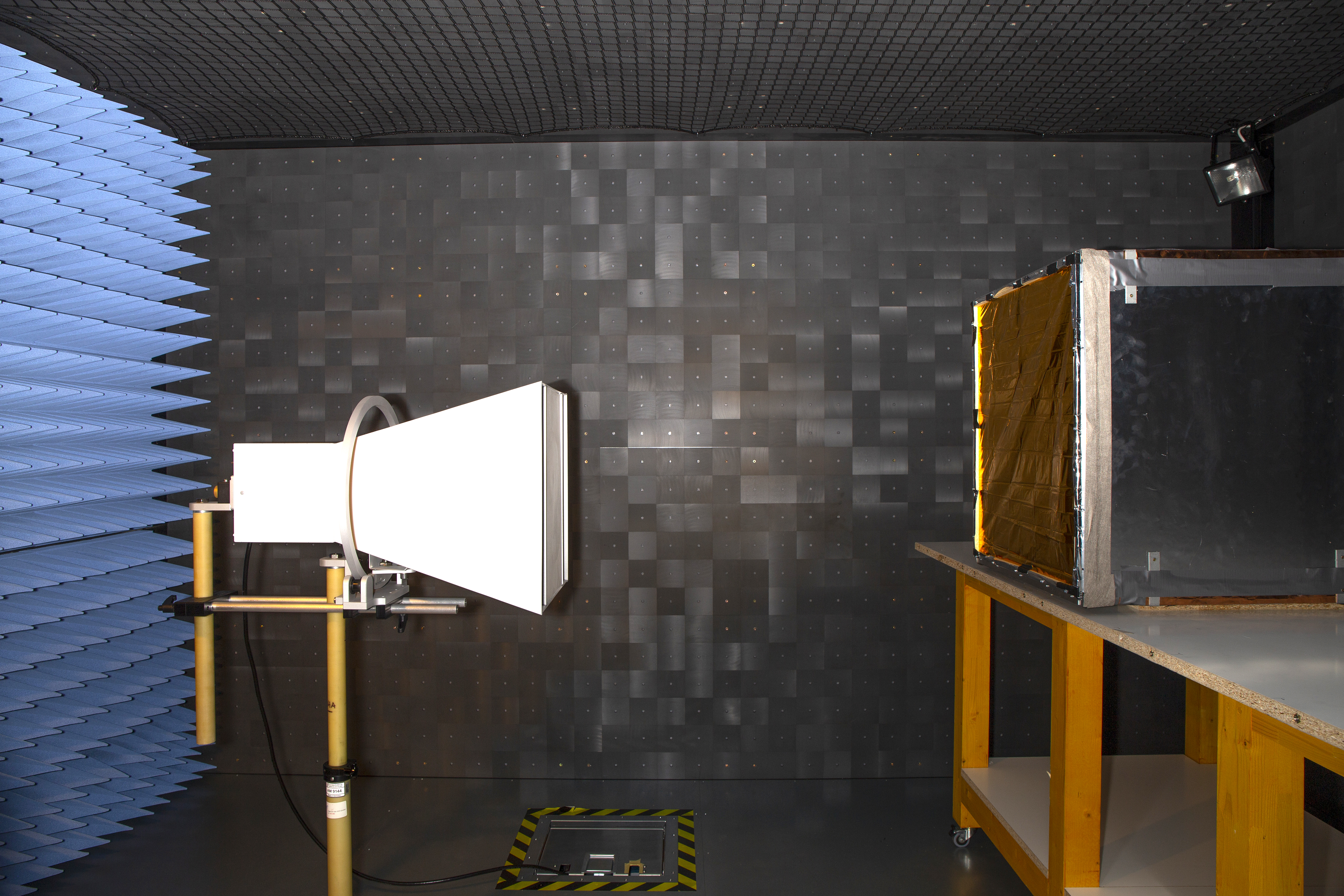
Lining the inside of the camouflage from below and on the sides with aluminum foil shields the terminal from ground-level jammers and significantly attenuates triangulable side emissions. In our article from 2021, we prove that even thin household aluminum foil causes very strong attenuation; at 5.2 GHz, it is already over 70 decibels, and in the Ku-band, the attenuation is likely to be significantly higher. However, since the wavelength is very short – 1 to 2.5 centimeters – there must be no gaps. The strips should be glued with overlap. Due to the limited view of the sky with the aluminum foil on the sides, Starlink will not work optimally from within the camouflage, but likely better than with strong Ku-band and GNSS interference.
Unfortunately, the risk of being detected by a reconnaissance aircraft overflight remains. But for some brave people, it seems worth the risk to show the world the truth about the protests and send calls for help to democracies. (amo)


