


Missing link: Has the end of the killer game debate been reached?
Gamers of the first hour have known it for decades: The debate about violence in computer games. Today, research has moved on. Time to end the debate.
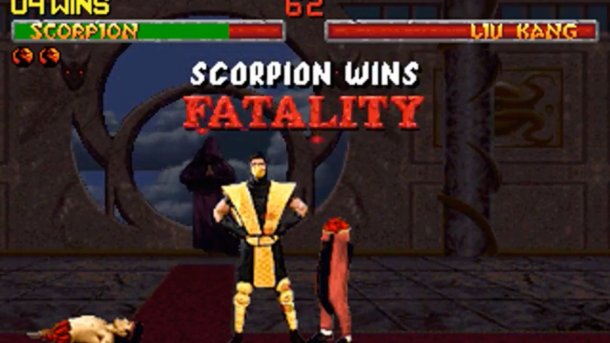
Killer game from 1994: Mortal Kombat II.
(Image: Screenshot/Acclaim/Midway)
Someone brought them around the corner, wiped them off the screen, bam: The killer game debate is suddenly gone. Like a pile of pixels after the power has been switched off. Yet it is at the heart of the cultural and social legacy of digitalization. For years, the argument raged between gamers and researchers, researchers and other researchers, politicians and gamers: does gaming make people aggressive? It was a debate that shaped at least two generations.
Anyone who has come into contact with computer games since the 1980s will be familiar with this from concerned parents and even more concerned politicians. Does playing computer games such as "Doom", "Quake", "Duke Nukem", "Counter Strike" or "Call of Duty" blunt young people in particular? Does it lead to a normalization of violence? There was no shortage of professions of faith – and research was carried out diligently.
Off to the index
Three well-known letters from the early days of computer games were: BPS. Because, as befits Germany, an authority watched over the welfare of children's tender souls: the "Federal Review Board for Publications Harmful to Young Persons" (now the "Federal Agency for the Protection of Children and Young Persons in the Media"). It has always had a controversial reputation as the guardian of morals in the Federal Republic of Germany, placing a wide variety of media on the "Index".
Depending on the decision of the BPS examiners, anything that ended up on this index of media harmful to minors was not allowed to be made accessible to young people, advertised or distributed at all. In addition to computer games, this mainly concerned films (before the "killer games", it was mainly "horror videos" that caused outrage across Germany).
In 1987, for example, the fun band "Die Ärzte" released their album "Ab 18" in protest against the indexing of two previous albums. The indexing letter adorned the back cover of the album. To this day, the album is still on the index due to a single track on it, but the cover is no longer.
Videos by heise
The practice of the BPS, later BPjS, then BPjM – the M stands for media – has often been controversial since it was founded in 1954. Does the practice of indexing make sense at all? Does it, like many other bans, make boring products exciting in the first place? "Strike before the BPS does" was the unambiguous review of a classic fighting game with too many red pixels in a computer magazine in 1994.
The game – "Mortal Kombat II" – was indexed by the BPS at the request of the Bochum Youth Welfare Office. And then confiscated by a Bavarian public prosecutor, just like the computer game magazine "Amiga Joker". The game's violence factor would hardly shock anyone today.
The killer games debate
On November 1, 1999, Germany is shaken by a shooting rampage. A 16-year-old Bavarian locksmith apprentice shoots several people and injures others in Bad Reichenhall. Just a few months earlier, two students in Littleton shoot 15 people at Columbine High School in Littleton, Colorado. In both cases, easily accessible weapons play a role – and a special social position of the gunmen in their environment. And computer games.
The rampage at a school in Erfurt in 2001 further fanned the debate. The year before "Counter Strike" had been released. The main topic of discussion in the German media: Violence in computer games. For some members of the public, the issue was obvious. The Frankfurter Allgemeine Sonntagszeitung even claimed in 2002: "A computer program from Sierra Entertainment trained the Erfurt shooter". The newspaper received letters from horrified gamers.
The situation also seemed clear for some politicians. Lower Saxony's Interior Minister Uwe Schünemann (CDU) in particular made a name for himself with flaming pleas, as did Bavaria's Interior Minister Günter Beckstein (CSU). The following year, the Free State of Bavaria tabled a motion in the Bundesrat to ban killer games. It petered out after the excitement had died down a little. In legal terms, this means: "Declared as done."
Experiencing violence: what shapes whom and how?
Almost 20 years later, it is clear that this has not become a mass phenomenon. But the debate continued for a long time. One name came up more often than any other: Christian Pfeiffer, former Minister of Justice, who entered the fray with his private "Criminological Research Institute of Lower Saxony" (KFN) to great media effect.
Pfeiffer's views were sometimes more nuanced than it sounded in the battle of words at the time. Pfeiffer was a strong advocate of the theory that computer games containing violence could dull the senses and therefore did not belong in children's rooms. At the same time, however, he was not an advocate of monocausal explanations, as preferred in the political arena. According to Pfeiffer, it is not computer games alone that turn boys into violent offenders. Rather, a mixture of factors such as experiences of violence in the social environment, for example in the family, as a normalization of violence, experiences of rejection and other factors – and probably also ball games.
Pfeiffer called this a "crisis of the young". In any case, it was about more than just console or computer games – but how it was all connected remained questionable for a long time. The debates changed with reality. The main group of perpetrators of violence continues to coincide strongly with the main user group of games – younger men. And their use of violence – could often not be deduced from computer games, for example in the debate surrounding the New Year's Eve incidents in Cologne in 2015.
Computer science professor Tobias Breiner, a specialist in game engineering, also attributes part of the earlier debate today to socialization – but not that of the players, but that of the discussants. "In editorial offices and in politics, a generation was still predominant at that time that had not grown up with computer games themselves and therefore could not assess their influence on the psyche from their own experience," he says. "First-person shooters were a simple populist scapegoat for more complex grievances that lead to rampages: Over- or underachievement in education, disintegrating family structures, demographic change, over-prescription of psychotropic drugs et cetera."
Psychological model criticized

(Image: rangizzz/Shutterstock.com)
Breiner would like to see more activity from research. "On the one hand, hardly any other topic has been researched so comprehensively and, at the same time, no other research topic has been worked on so unsoundly," says Breiner. However, there was a lack of valid long-term studies that methodically investigated a causal relationship. For Breiner, there is one main reason for this: "Anderson's General Aggression Model was very popular in psychology at the time, which suggested that computer games had a positive influence on aggression. However, this GAM model was not well-founded, proved to be incorrect and is now outdated."
Craig A. Anderson and Brad J. Bushman's model was long considered the standard for interpreting data on the interaction between game-based experiences of violence and aggression. The opinion that it is outdated is not shared by everyone involved in research on computer games. The authors last aggressively defended the model in 2022. And accused critics of claiming that the data was clear and showed correlations.
But is it conceivable that a psychological explanatory model with methodological flaws has distorted a discourse to such an extent? The debate in specialist circles goes on – in a tone that suits the topic: Opponents are taking sharp shots at each other. One group of authors accused the inventors of the GAM that the thesis confirmation was largely inherent in their model. It is not without reason that numerous publications based on the GAM have been withdrawn lately.
At the empathy threshold
The fact that violent games lower the inhibition threshold for violence is still considered probable in large parts of research. Even GAM critics are not prepared to rule this out. On the other hand, there is relatively recent research from other disciplines that questions the overall effect. For example, researchers of an Austrian study have come to the conclusion that video games have no influence on players' empathy skills. However, without a change in empathy values, a disposition towards violence would be independent of this. Does this indicate a fundamental change? For decades, media impact research has shown that media violence does not leave its mark on everyone, but it does on some people.
To this day, the legal basis of the Federal Agency for the Protection of Children and Young People assumes that content is harmful to development or even harmful to minors. Section 18 of the German Youth Protection Act states that media - including games that are harmful to minors - are to be indexed if they "depict acts of violence such as murder and butchery scenes in a self-serving and detailed manner or if vigilante justice is suggested as the only proven means of enforcing supposed justice". If there were actually no personality-altering effect at all, the legal regulation would be deprived of its scientific basis.
Social media new place of violence
The Criminological Research Institute of Lower Saxony (KFN) is no longer researching the topic. The reason "lies in the development of scientific findings recently", explains a spokesperson. "Many studies have indicated that there is no clear causal link between the consumption of violent computer games and an increased tendency towards real violence." Other factors such as family circumstances, socio-economic conditions and personal predispositions play a much greater role in the development of violent behavior. Which is why research is now being carried out there.
The debate on violent media is now focusing on other phenomena. Depictions of bloody reality, the many gruesome clips from Russia's war against Ukraine on social media platforms, in which real people are tortured, killed or mutilated, have long been a larger field than the number of relevant games. The sheer number of content alone makes it unlikely that effective measures are even possible here. Research in this area is still in its infancy, while calls for platform operators to take responsibility are already loud and clear.
Since a change in the law in 2003, indexing has been valid for 25 years. After that, it is lifted or extended if the BZKJ deems it appropriate following a new review. Those affected can also apply to have the indexing lifted beforehand. In 2024, the BZKJ stated that it had extended the indexing of three online, mobile or computer games, two of them for pornography and one for "brutalizing effects". This year, 18 games were removed from the list upon application. Of the games currently indexed, 24 have been on the index for more than 20 years. At this rate, the list could be free of computer games by 2044.


(vbr)


